










































Ron Baron’s Timeless Warning on Inflation and a Nod to Bitcoin
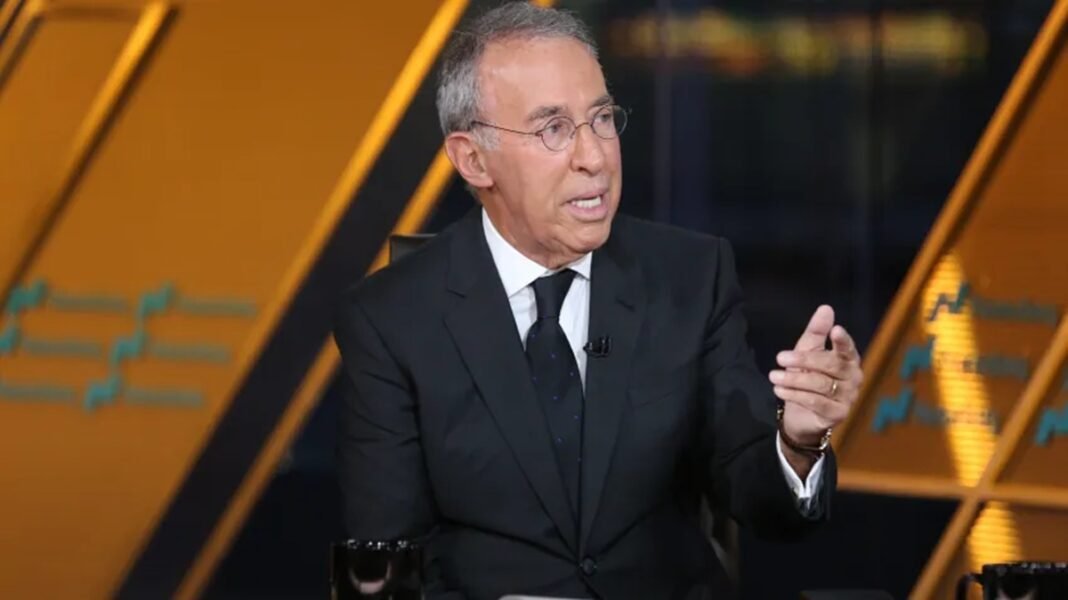
Ron Baron, the billionaire founder and CEO of Baron Capital Management—a firm overseeing $45 billion in assets with a 40-year track record of outperforming the S&P 500—has long been a vocal critic of inflation’s insidious erosion of purchasing power. In a recent interview and commentary, Baron reiterated his longstanding thesis: At an average annual rate of 4-5%, inflation effectively halves the value of money every 14-15 years. This isn’t hyperbole; it’s a mathematical reality grounded in historical data from his five-decade career on Wall Street. While Baron remains a staunch advocate for long-term stock investing as the ultimate hedge—emphasizing compounding growth in equities over stagnant cash or bonds—he offered a brief but intriguing aside on Bitcoin, calling it “fantastic” without diving deep into advocacy. As the crypto market stabilizes at a $3.57 trillion cap amid Bitcoin’s consolidation above $103,000, Baron’s perspective resonates: In an era of persistent debasement, assets like Bitcoin could play a complementary role, though he stops short of full-throated endorsement.
The Inflation Math: A Relentless Halving Act
Baron’s core argument is deceptively simple yet profoundly impactful. He estimates long-term inflation at 4-5% annually—a figure aligned with U.S. historical averages since the 1970s, including peaks like the 1970s oil crisis and more recent post-pandemic surges. At this rate, the purchasing power of a dollar erodes exponentially:
- Rule of 72 Insight: To calculate the halving time, divide 72 by the inflation rate. For 4.6% (Baron’s midpoint), it takes roughly 15.65 years for money’s value to halve. At 4%, it’s 18 years; at 5%, just 14.4 years.
- Historical Precedent: Baron points to his lifetime data: Cars, college tuition, salaries, groceries, and homes have all doubled in price every 14-15 years. For instance, the average U.S. new car price rose from $3,500 in 1970 (Baron’s early career) to $48,000 today—a 13.7x increase, outpacing even 4% compounded growth due to episodic spikes.
- Compounding Erosion: Over 50 years (Baron’s investing horizon), 4.6% inflation compounds to a 99% loss in value. A $1,000 savings in 1975 would buy just $5 worth of goods today.
This debasement isn’t abstract—it’s why Baron has never owned a bond or held significant cash: “The way they pay it back [U.S. debt] is not by paying down debt… they pay it back by making your money worth less.” In a world of $35 trillion U.S. debt and endless money printing, inflation acts as a stealth tax on savers.
Baron’s Inflation Hedge: Stocks Over Stagnation
Baron’s antidote? Equities. He posits that the U.S. economy and stock market double every 10-12 years—outpacing inflation’s 14-15-year halving cycle—through innovation and productivity. His firm’s growth-focused strategy has delivered 15-20% annualized returns since 1982, turning $10,000 into over $1.5 million. “I’m always invested,” Baron says, avoiding the “entropy” of idle cash. Bonds? Dismissed as inflation losers, with yields too low to compensate for erosion.
This philosophy echoes Warren Buffett’s: Invest in businesses, not speculation. Baron’s portfolio—top holdings like Tesla (up 1,200% since 2014) and SpaceX—thrives on compounding, where reinvested dividends and earnings growth eclipse fiat decay.
Bitcoin in Baron’s Lens: “Fantastic,” But Not the Focus
Baron doesn’t shy from crypto entirely. In the interview, he briefly acknowledged Bitcoin: “Bitcoin has been fantastic, obviously.” This lukewarm praise aligns with his measured take—recognizing BTC’s 150% YTD gains and role as “digital gold” (fixed 21 million supply vs. fiat’s endless printing)—but without the zeal of full converts. Baron views it as a speculative asset, not a core holding, preferring equities’ tangible cash flows. Still, his nod validates Bitcoin’s inflation-hedge narrative: At 0.8% annual inflation post-2024 halving, BTC’s scarcity contrasts the dollar’s 4-5% debasement.
For context, Bitcoin’s historical outperformance—up 230% annually since inception—dwarfs stocks’ 10-12% doubling cycle, but volatility (35% annualized) tempers its appeal for Baron’s long-horizon style. In a 2025 market with $70 billion in BTC ETF AUM and institutions absorbing 300K coins, Baron’s comment subtly endorses BTC as a portfolio diversifier, especially amid 3% U.S. inflation.
Takeaways: Act on the Math, Not the Noise
Baron’s message is timeless: Inflation’s halving act demands action—equities for growth, perhaps a sliver in Bitcoin for scarcity. At 4-5%, your savings lose half in 15 years; stocks double every 10-12. For crypto enthusiasts, BTC’s “fantastic” run reinforces its debasement shield, but Baron’s equity bias reminds us: Compounding beats speculation. In a $3.57 trillion market, heed the math—your future self will thank you.