









































From Diabetes Pioneer to Trillion-Dollar Titan
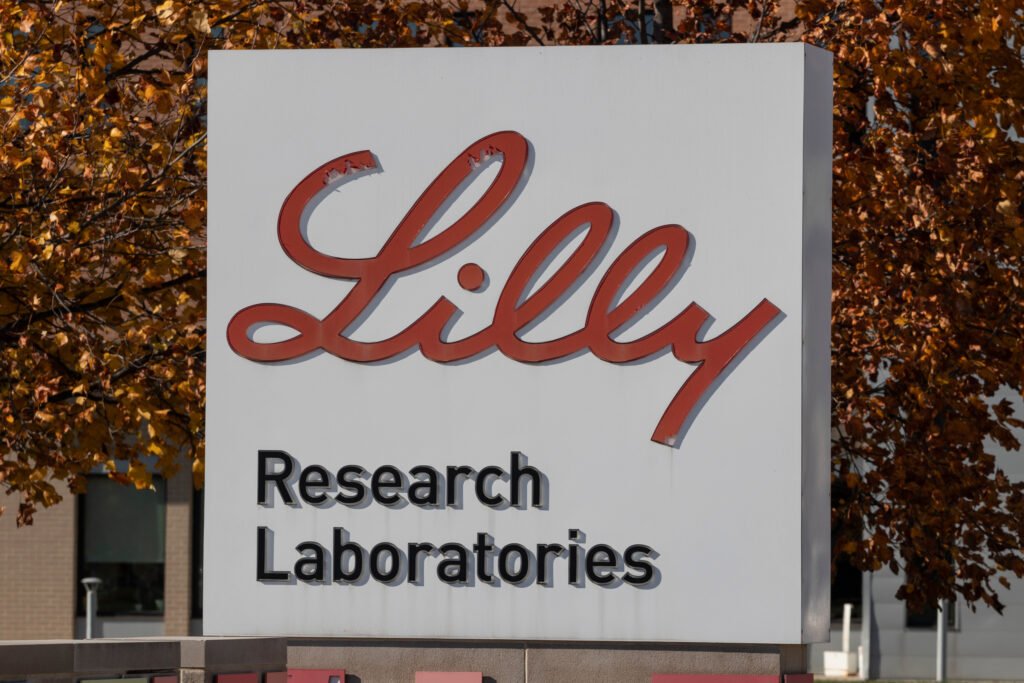
On November 21, 2025, Eli Lilly and Company (NYSE: LLY) achieved a groundbreaking feat, becoming the first healthcare and pharmaceutical company in history to surpass a $1 trillion market capitalization. Shares surged 5.8% to close at $1,058.77, pushing the company’s valuation to approximately $1.004 trillion—eclipsing previous healthcare leaders like Johnson & Johnson ($470 billion) and Novo Nordisk ($590 billion).
This milestone, reached amid a broader market dip (NASDAQ down 2.8%), underscores Lilly’s explosive growth driven by its blockbuster weight-loss and diabetes drugs Mounjaro and Zepbound, which have redefined the obesity treatment landscape and propelled revenue forecasts to new heights.
Lilly’s ascent to the trillion-dollar club—joining an elite group dominated by tech giants like Apple, Nvidia, Microsoft, and Amazon—marks a paradigm shift: For the first time, a pure-play healthcare firm to achieve this valuation without heavy reliance on consumer products or diversification into tech.
As CEO David Ricks stated in a post-earnings call: “This reflects the transformative impact of our incretin medicines on global health and our pipeline’s potential to address unmet needs in Alzheimer’s, cancer, and beyond.” In a year where the S&P 500 Healthcare sector gained 12% YTD (lagging the index’s 25%), Lilly alone has soared 85%, adding over $500 billion in market cap since January.
This breakthrough arrives amid intense competition with Novo Nordisk in the GLP-1 agonist space, where combined sales of Mounjaro/Zepbound and Ozempic/Wegovy are projected to exceed $100 billion annually by 2030. Yet, Lilly’s edge—superior efficacy data for Zepbound (22% average weight loss vs. Wegovy’s 15%) and manufacturing scale-up—has cemented its lead, with Q3 2025 revenue hitting $11.5 billion (up 45% YoY) and full-year guidance raised to $45-46 billion.
The Drivers: GLP-1 Dominance and Pipeline Power
Lilly’s trillion-dollar leap is no accident—it’s the culmination of strategic bets paying off spectacularly:
- Mounjaro & Zepbound Phenomenon: The dual GIP/GLP-1 agonists generated $4.4 billion in Q3 alone (up 120% YoY), with Zepbound supply constraints easing and demand “unprecedented.” Analysts forecast $25 billion in 2026 sales as production ramps to 20 million doses annually.
- Pipeline Depth: Alzheimer’s candidate donanemab (Kisunla, approved July 2025) adds $2-3 billion potential; orforglipron (oral GLP-1) and retatrutide (triple agonist) target 2027 launches, expanding into $200 billion obesity/cardiovascular markets.
- Manufacturing Mastery: $18 billion invested since 2020 in U.S./EU facilities resolved shortages, enabling 15x production growth—key to outpacing Novo Nordisk.
Financials dazzle: Q3 EPS $4.36 (beat $4.25 est.), gross margins at 82%, and $10 billion returned via buybacks/dividends YTD. At 48x forward earnings (vs. sector 18x), the premium reflects 30%+ CAGR expectations through 2030.
| Metric | Q3 2025 | YoY Change | Notes |
|---|---|---|---|
| Revenue | $11.5B | +45% | Mounjaro/Zepbound $4.4B (+120%) |
| EPS (Adj.) | $4.36 | +180% | Beats $4.25 est. |
| Market Cap | $1.004T | +85% YTD | First healthcare $1T |
| GLP-1 Sales Guidance (2025) | $25B | Revised up | Supply constraints easing |
Market Reaction and Broader Implications
LLY shares gapped up 5.8% on November 21, adding $55 billion in a day despite NASDAQ’s 2.8% rout—the largest single-day gain since August. Volume hit 28 million shares (3x average), with options implied volatility spiking to 35%. X buzz: “Lilly $1T—GLP-1 drugs just rewrote healthcare history” (@CNBCFastMoney, 1.2K likes).
Implications ripple wide:
- Sector Re-Rating: Healthcare’s first trillionaire could lift peers—Novo Nordisk +8% intraday sympathy.
- Policy Scrutiny: Drug pricing debates intensify; Trump’s tariff dividend talk ($2K checks) contrasts affordability concerns.
- Investor Rotation: From AI hype (Nvidia -6.8%) to “real-world impact” plays like obesity treatments.
Analysts remain bullish: Morgan Stanley’s $1,200 PT (20% upside), Goldman Sachs Overweight at $1,150. Risks: Patent cliffs (2030s) and competition (Pfizer’s oral GLP-1).
In a market craving tangible growth, Lilly’s $1 trillion isn’t hype—it’s healthcare’s AI moment. From insulin pioneer to obesity overlord, the barrier’s broken. The next trillion? Watch this space.