







































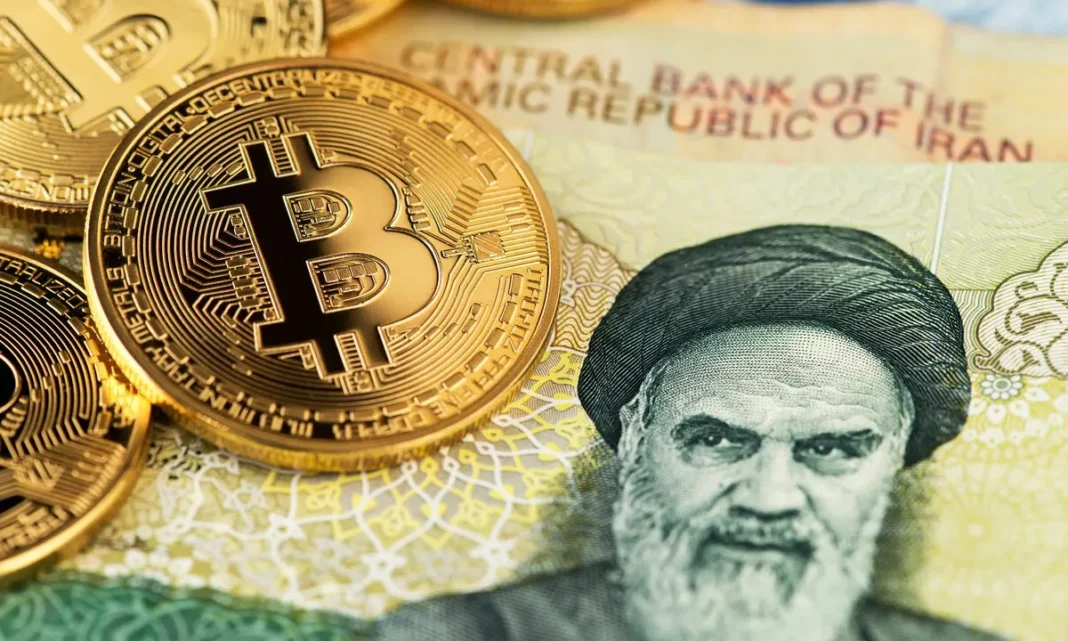


Iran’s Strategic Pivot to Cryptocurrency: Bypassing Sanctions in 2025
Iran’s economy, battered by decades of U.S. and international sanctions, has increasingly turned to cryptocurrency as a lifeline for evading financial isolation. Since the U.S. withdrawal from the Joint Comprehensive Plan of Action (JCPOJ) in 2018, Iran has faced renewed pressure, including the reactivation of UN sanctions in August 2025 via a “snapback mechanism” triggered by France, Germany, and the UK over uranium enrichment concerns. This has severed access to the SWIFT payment system, crippling traditional trade and remittances. In response, Iranian officials and businesses are aggressively promoting crypto as a decentralized alternative, urging BRICS partners like India and Russia to accept digital assets for bilateral trade. As Mohammad Bagher Ghalibaf, Speaker of Iran’s Parliament, stated at the deBlock Summit in November 2025, “Cryptocurrencies provide new ways to do business and pay for trade,” positioning them as a sanctions-busting tool.
This strategy isn’t new but has intensified in 2025 amid economic woes: Inflation at 40%, rial devaluation, and energy crises exacerbated by illegal crypto mining. By mid-2025, 22% of Iranians (over 20 million people) owned or used crypto, up from 13% in 2023, driven by necessity rather than speculation. The government’s dual approach—regulating domestic platforms while leveraging crypto for imports—has enabled $100 million+ in oil exports via digital assets since 2023, with broader networks handling $600 million. Below, we explore the mechanisms, scale, and global repercussions.
Mechanisms: How Iran Uses Crypto to Evade Sanctions
Iran’s crypto playbook combines state oversight with underground innovation, focusing on mining, exchanges, and cross-border swaps:
- Bitcoin Mining as Revenue Source: Legalized in 2019, mining accounts for 4.5% of global Bitcoin hashrate, generating $500 million annually in BTC used for imports. The government mandates sales to the Central Bank, but illicit operations (95% of total) fuel evasion, consuming 2% of national electricity despite blackouts. In 2025, subsidies for licensed farms were cut, pushing more underground activity.
- Exchanges and Laundering: Nobitex, Iran’s largest exchange (11 million users), processed $7.8 billion since 2018, often routing through third-party platforms in lax jurisdictions like Turkey or the UAE. A June 2025 hack stole $90 million, but outflows surged 300% post-incident for capital flight. The Central Bank’s January 2025 unblocking of crypto-rial gateways (with data-sharing mandates) formalized evasion, though a December 2024 ban on fiat conversions highlighted regulatory whiplash.
- BRICS and Trade Swaps: At the November 2025 deBlock Summit, Iran pushed BRICS (Brazil, Russia, India, China, South Africa) to accept crypto for oil and goods, bypassing SWIFT. Russia and China—fellow sanctioned powers—have piloted similar systems, with Iran exporting $100 million in oil via BTC/Tether since 2023. India’s reluctance (no de-dollarization agenda) tempers this, but $190 trillion global remittances offer a backdoor.
- Illicit Networks: The IRGC-Qods Force launders via crypto for proxies like Hezbollah, with U.S. Treasury sanctions in September 2025 targeting $100 million in oil-related transfers. Everyday Iranians use it for capital flight ($15.8 billion received in 2024, per Chainalysis), hedging against 40% inflation.
Scale: $15.8 Billion in 2024 Flows, Rising in 2025
- Receiving Volume: Sanctioned entities (Iran leading) received $15.8 billion in crypto in 2024—39% of global illicit flows—up from $8.6 billion in 2023.
- Mining Output: $500 million+ annually, with 95% illicit operations straining the grid (2% national power use).
- Trade Impact: $100 million+ in oil exports via crypto since 2023; broader networks $600 million.
- User Base: 22% of population (20 million+) owns/uses crypto, up 69% YoY.
| Year | Crypto Received ($B) | Key Use Case | Sanctions Response |
|---|---|---|---|
| 2023 | 8.6 | Mining/Imports | Legalization of mining |
| 2024 | 15.8 | Oil Exports/Capital Flight | Central Bank fiat unblocking |
| 2025 (YTD) | ~10 (proj.) | BRICS Trade | deBlock Summit push |
Global Repercussions: U.S. Crackdowns and BRICS Pushback
The U.S. Treasury’s OFAC has ramped up responses: 13 designations with crypto addresses in 2024 (second-highest ever), targeting $100 million in Iranian oil networks via Chinese/UAE fronts. September 2025 sanctions hit IRGC-linked laundering, freezing $134 million in London properties. Yet, Iran’s BRICS overtures—echoed by Russia’s crypto mining and China’s digital yuan pilots—challenge Western dominance, with $53 billion in global crypto scams since 2023 underscoring enforcement gaps.
XRP’s ISO 20022 edge and ETF inflows ($58 million Day 1) offer compliant alternatives, but Iran’s model persists as a sanctions evasion blueprint. As @XRedPilled91 posted: “Iran eyes crypto trade with BRICS to bypass sanctions—de-dollarization accelerating.”
Iran’s crypto gambit—$15.8 billion in 2024 flows—highlights sanctions’ double edge: Innovation born of isolation, but at the cost of grid strain and illicit ties. As Ghalibaf urged: “De-dollarization via crypto is inevitable.” The rial weakens, but the blockchain endures.